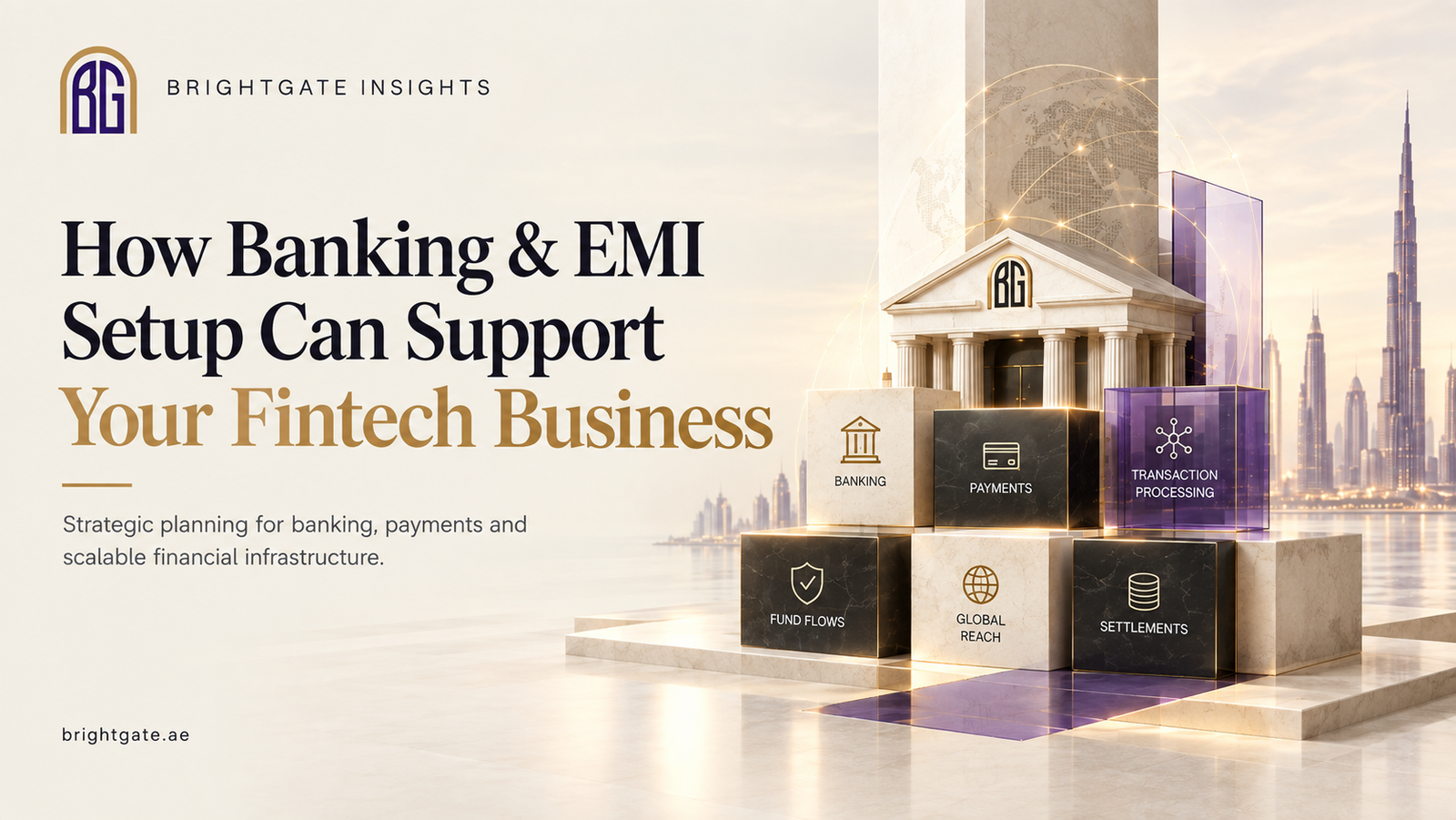
The fintech sector continues to reshape how businesses and consumers interact with financial services. New payment models, digital platforms and cross-border transaction capabilities continue to create opportunities for fintech entrepreneurs worldwide. However, behind any successful fintech organisation, there is an operational structure that facilitates the flow of money within the organisation. As fintech businesses scale, Banking & EMI Setup becomes an important consideration when evaluating how payment infrastructure, transaction flows and operational frameworks will support long-term growth.
For many fintech businesses, efficient payment processing can be just as important as the product itself. Customer onboarding, transaction settlement, account structures and payment routing all influence how effectively the business can operate as transaction volumes grow. Banking infrastructure should therefore be considered a strategic business requirement rather than a purely operational matter.
Why Financial Infrastructure Matters From the Beginning
Fintech companies tend to work in an environment where transactions are made through the various customer touchpoints on a continuous basis. The operational performance is determined by the underlying infrastructure that supports the activities of the business, regardless of whether the business is facilitating payments, digital wallets, merchant services, remittance activities, or financial technology solutions.
A payment experience can seem straightforward to the end user. There are many systems, however, interacting behind the scenes. Customer onboarding, payment routing, transaction processing, settlement procedures, and account administration must all work effectively in concert.
Planning financial infrastructure early can help businesses reduce operational bottlenecks as transaction volumes increase. The objective is not simply to open an account or establish technical connectivity. It is to design a structure that supports the intended business model, current operational requirements and future expansion.
How Banking & EMI Setup Fit Into Modern Fintech Infrastructure
The financial-services environment has changed significantly over the past decade. Traditional banking relationships remain important, while many fintech businesses also evaluate relationships with authorised Electronic Money Institutions and payment institutions as part of their wider operating infrastructure.
For fintech companies with international operations, access to appropriate banking and payment relationships can provide additional flexibility when designing customer payment journeys and managing transaction flows. The appropriate arrangement depends on the business activities, customer profile, geographic markets, transaction flows and long-term commercial objectives. A strategic assessment should therefore take place before implementation begins.
EMI Licensing, Compliance and Safeguarding Considerations
Banking, payment and electronic-money activities may be regulated depending on the jurisdiction, operating model and services involved. Businesses may need to assess EMI licence requirements, payment institution authorisation, KYC and AML controls, safeguarding of customer funds, governance, reporting obligations and provider due diligence.
Bright Gate Group provides strategic advisory and project coordination. Account opening, EMI relationships, payment services, safeguarding arrangements and other regulated services remain subject to applicable requirements and the independent approval of the relevant financial institutions, licensed providers or regulatory authorities.
Designing Infrastructure Around the Business Model
Fintech businesses do not all operate in the same way. A digital-asset business may have different infrastructure requirements from a payment platform, merchant-services provider or embedded-finance company. Banking and payment infrastructure should therefore support the wider business model rather than be treated as a separate project.
Considering these factors together gives businesses a clearer understanding of the infrastructure required for day-to-day operations while allowing future expansion to be considered from the beginning. By taking these factors into consideration, businesses will be able to have a better idea of the infrastructure required to facilitate day-to-day operations as well as prepare to expand in the future.
Supporting International Transaction Activity
One of the most significant spheres of development in the fintech sector continues to be cross-border payments. Businesses with global clients often need payment systems that can accommodate different jurisdictions, currencies and types of transactions. International payment activity may involve correspondent banking solutions, local settlement mechanisms, foreign exchange conversion processes and multi-currency transaction management. These operational factors can influence both customer experience and internal efficiency.
As businesses expand into multiple markets, transaction management often becomes more complex. The various customer locations, banking conditions, payment methods and settlement procedures may become a challenge to the operation unless they are taken into consideration in the planning stage.
A powerful infrastructure system can assist companies in establishing more uniformity in payment transactions and aid in a more seamless customer experience.
Payment Flows and Settlement Structures
A fintech business may process thousands of transactions across different payment methods and currencies. The design of payment flows can affect reconciliation, reporting, liquidity management and customer experience. When planning financial infrastructure, businesses often assess settlement cycles, transaction-routing logic, reconciliation controls, multi-currency capabilities and account structures. Early planning can help reduce operational friction as transaction volumes increase.
Some businesses also assess real-time settlement capabilities, reconciliation workflows and treasury management processes when evaluating infrastructure requirements.
Technology and Banking Infrastructure Must Work Together
Current fintech companies rely on technology. Nevertheless, technology is not enough to build a successful financial ecosystem. Banking infrastructure and technology environments are usually developed concurrently to create the strongest operating models.
Reliable connectivity is essential in payment platforms, customer interfaces, transaction monitoring systems, operational reporting tools, onboarding workflows, and account-management environments. This is among the reasons why many fintech founders start infrastructure conversations prior to product launch as opposed to when operational needs become more complicated.
Bringing Infrastructure Decisions Into One Strategy
Banking & EMI Setup projects often involve several interconnected components. Business structure, payment requirements, operational workflows, banking relationships, compliance considerations and implementation planning should be evaluated together. Without effective coordination, businesses may adopt separate systems or provider relationships that do not work efficiently within the wider operating model.
Bright Gate Group assesses financial-infrastructure requirements within the context of the broader business strategy. Rather than focusing on isolated solutions, the objective is to evaluate how banking, payment and operational decisions support current requirements, future growth plans and wider commercial objectives.
Building Infrastructure That Supports Future Innovation
Sustainable fintech growth depends on more than technology or product development. Well-planned banking infrastructure, payment frameworks and operational readiness can provide a stronger foundation for future opportunities. A company’s ability to adapt to changing markets is often influenced by the scalability of its banking relationships, payment systems and operational framework.
Bright Gate Group advises on banking and financial infrastructure projects, helping businesses assess structures, payment environments, and operational frameworks that align with long-term commercial objectives.